Technology
Steel, CAD, and a lot of finding out.
What we are actually building, where the designs came from, and how far along each piece is.
Where it started
One piece of NASA technology.
Hephaestus began with a single piece of technology out of NASA, and we have been building outward from it ever since.
NASA develops an enormous amount of technology with public money and a good deal of it is available to American companies to license and build on. That is the point of it. Rather than start from a blank sheet we started from work that had already been proven, and went after the part nobody had finished.
To be precise about it. Building on published NASA technology is not the same as being a NASA contractor, and we are not one. We have no contract, no partnership and no endorsement from NASA or any other agency. What we have is a starting point that was made public and a lot of work of our own on top of it.
Drive wheels
The first thing we built, and the reason why.
Everything a surface machine does comes down to whether it can hold on to the ground.
Lunar regolith is loose, deep and angular, and it does not compact like soil. A conventional tyre sinks and stops. A smooth rigid wheel spins. And a machine at a sixth of its Earth weight has almost nothing pressing it down to generate grip.
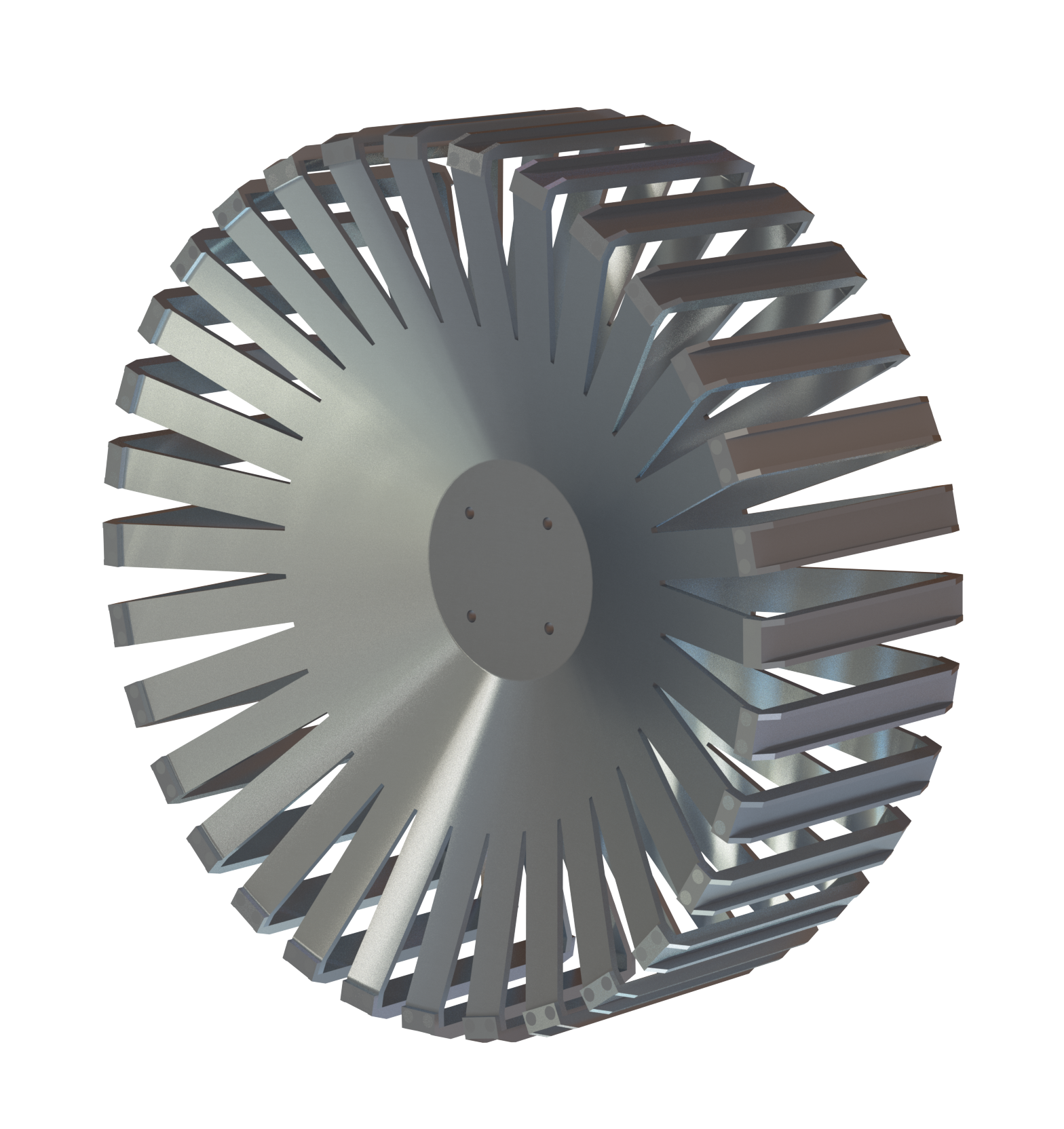
So the blades do the work instead of the weight. Each one bites into loose material and pushes against it rather than relying on friction that is not there. It is closer to a paddle than a tyre.
The renders came first. Then we started cutting them.
From render to steel
Four stages, and we are in the middle.
Computer-aided design
Every part is drawn before it is cut. We are still building our CAD capability and we are open about that — some of the work is ours and some is bought in while we learn.
Cut and fabricate
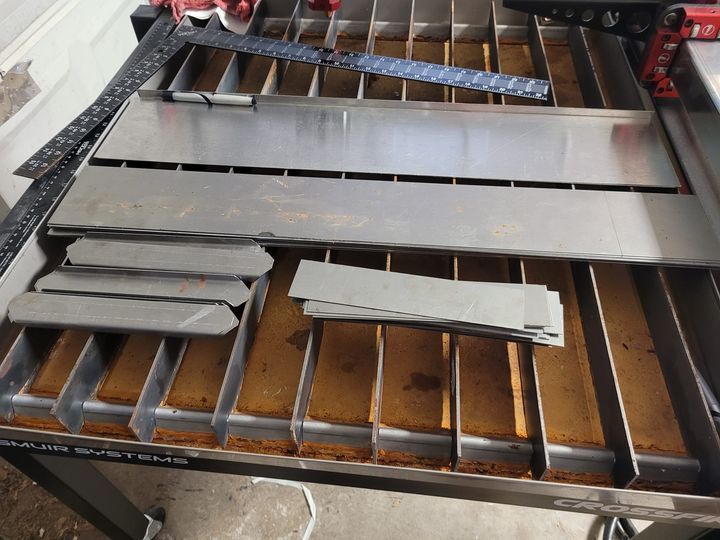
Sheet steel through the brake in our own shop for what we can do, ordered in for what we cannot yet. Every month a little more of it happens on our floor.
Assemble and test
Build it, load it, run it, break it. Terrestrial testing cannot give you low gravity, but it will tell you what fails under load and what fills with dust.
Protect the idea
We are submitting patents on a number of our designs. For a company this size the intellectual property may end up mattering as much as the hardware.
In the shop
What that actually looks like.
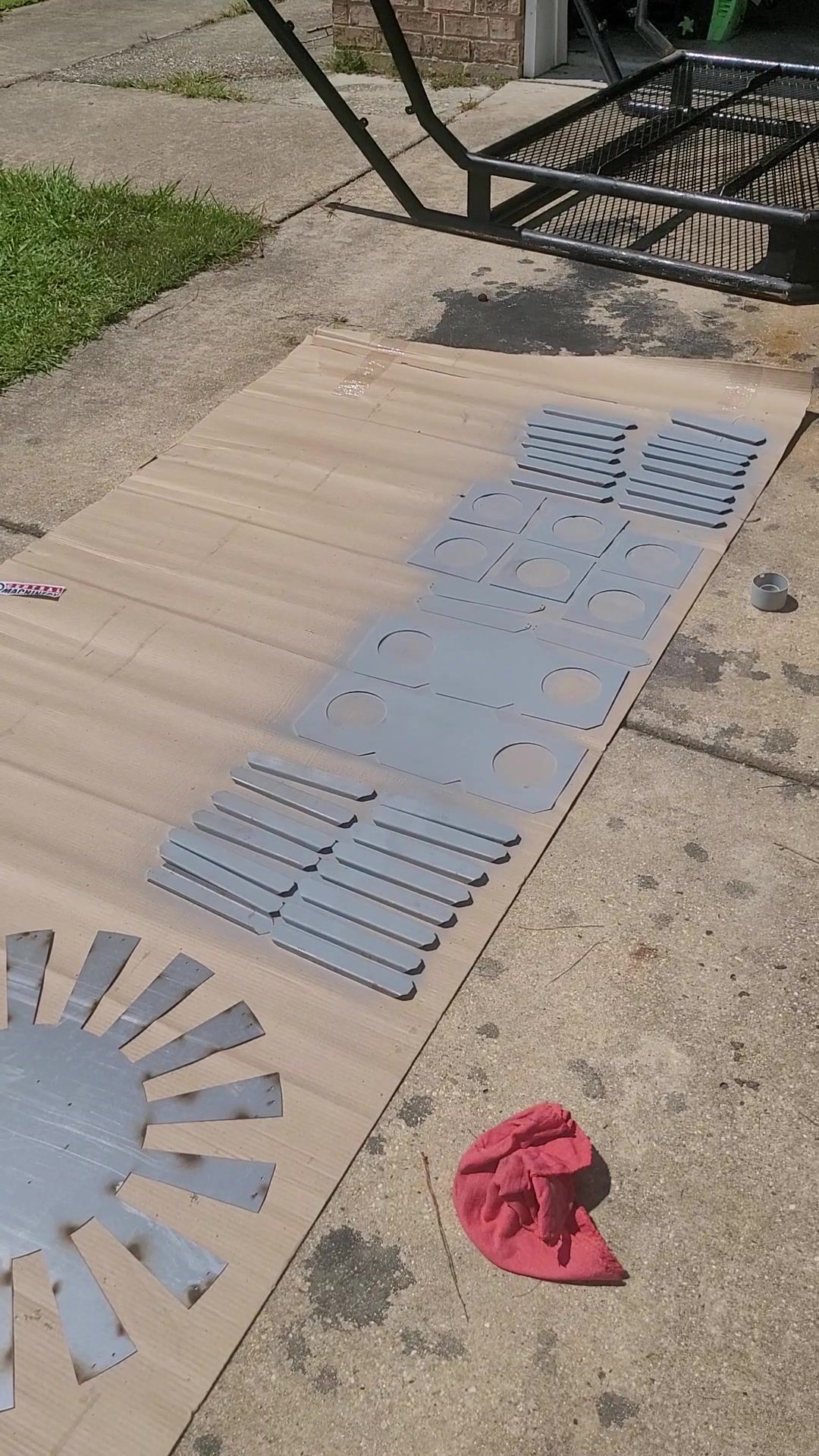
Cut blades laid out beside a welded frame. This is the unglamorous middle of the process, and it is where the design either survives contact with reality or does not.
Nothing here has flown. Nothing here is qualified for flight. What it is, is real steel that we cut, assembled and learned from — which is a good deal more than a rendering.
The honest state of it
We are a small company still building up capability. Some things get cut in house and others get ordered online. We are learning CAD as we go, and learning how to run a website while we are at it.
We would rather show you that than pretend to a machine shop we do not have. As we go along, more gets done in house.
What NASA is testing
For scale, and for context.
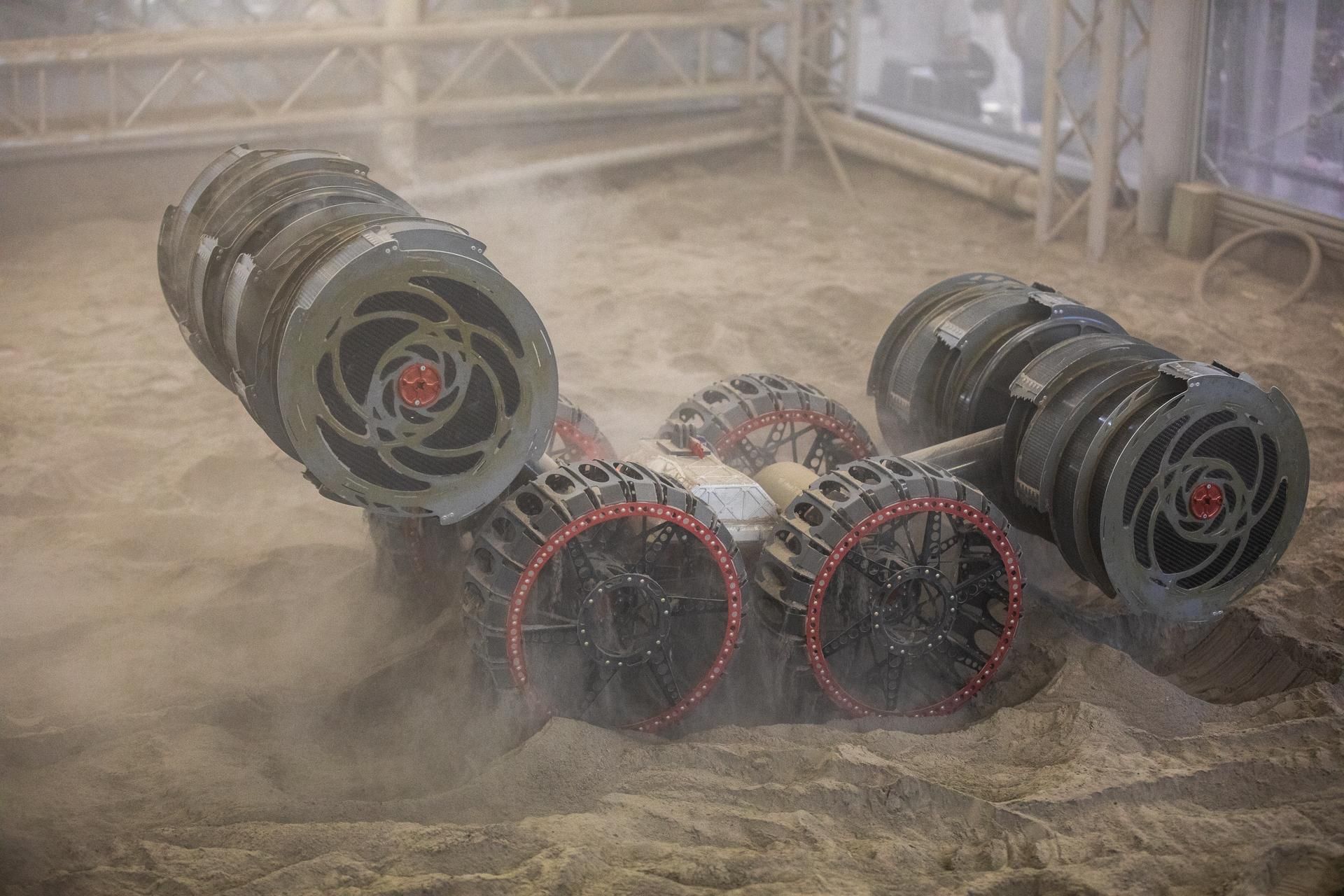
This is not our hardware. It is NASA's ISRU Pilot Excavator under test in a regolith bin at Kennedy Space Center, and we include it because it shows the problem clearly.
Bucket drums working through simulated lunar regolith, on a gravity offload rig that takes most of the machine's weight away to imitate the Moon. That is the environment our wheels are designed for.
Serious people with serious budgets are working on this. We are not claiming to be ahead of them. We are claiming there is more work here than one agency can do, and we intend to be useful.
The hardware
Come and help build it.
Fabricators, CAD people, controls engineers, and the technicians who will run it. Get on the list.