Service · Sustainable systems
A place people can stay, not visit.
Making our new homes somewhere mankind can actually live — which means closing loops rather than running down a stockpile and hoping the next ship is on schedule.
Visit versus stay
The difference is arithmetic.
An expedition takes what it needs and comes home. A settlement cannot, because the resupply bill never stops and every launch window is a single point of failure.
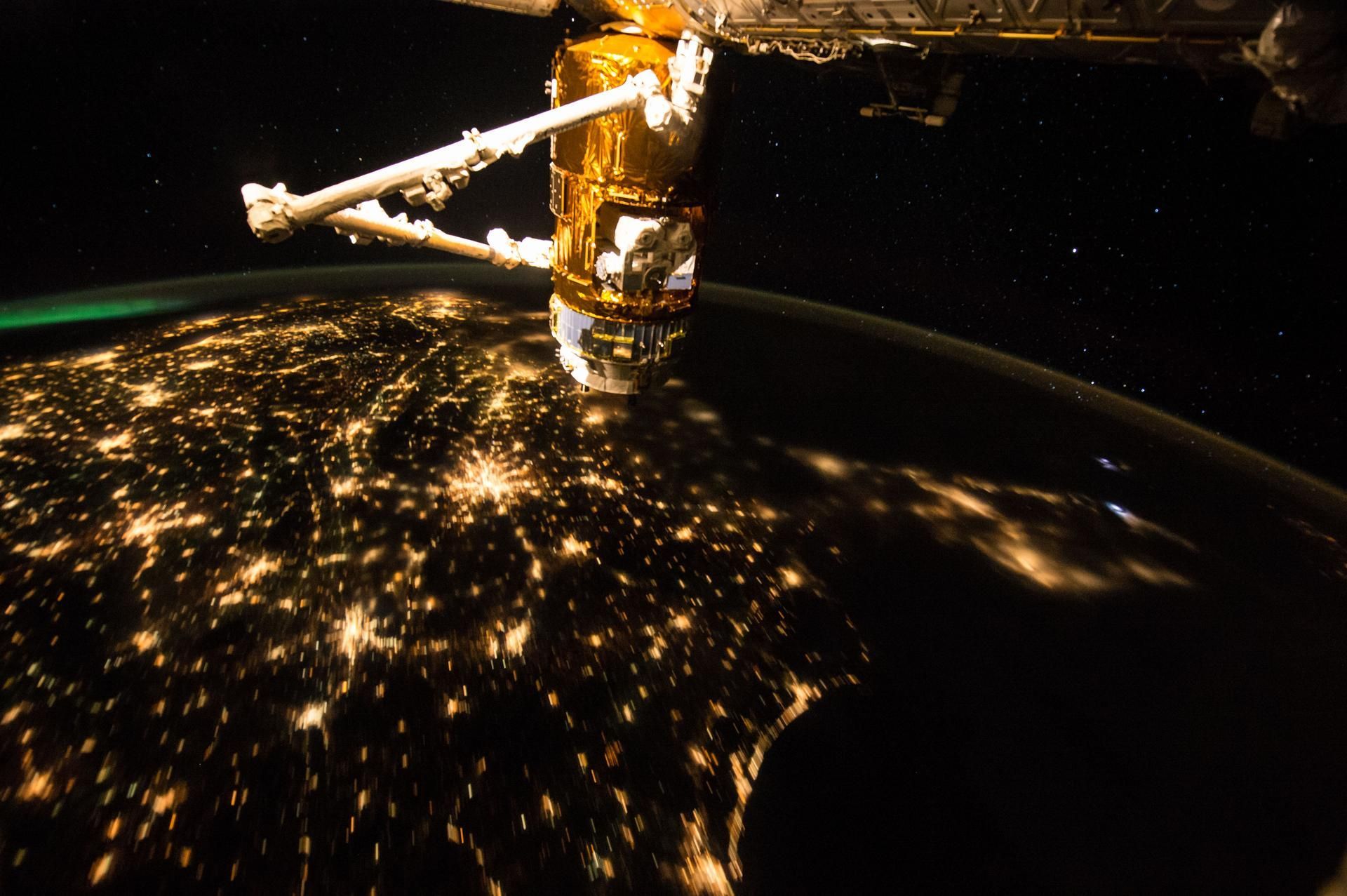
The International Space Station has kept people alive continuously for over two decades, and it does it four hundred kilometres up with regular resupply from a planet directly below. The Moon is a thousand times further. Mars is a million.
At those distances self-sufficiency stops being an efficiency and becomes the entire safety case.
The loops that have to close
Four of them, in order of urgency.
Air
Oxygen recovered from regolith and from carbon dioxide the crew breathes out. The loop that fails fastest, and the one nobody gets to be relaxed about.
Water
Recovered, filtered and reused, topped up from polar ice rather than from Earth. Drinking, growing, cooling and shielding all draw on the same tank.
Power
Enough generation and enough storage to carry a base through fourteen days of night with no sunrise coming.
Material
Metal recovered, reworked and reused. A broken part becomes stock for the next one rather than rubbish nobody can throw away.
Where machinery fits
Loops need feeding.
Every one of those loops starts with bulk material that somebody has to go and get.
Oxygen extraction needs regolith delivered to it, by the tonne, continuously. Water needs ice mined out of permanently shadowed crater floors, which are among the coldest places in the solar system. Material recovery needs the scrap collected and moved.
The processing plants are somebody else's speciality and there are good people working on them. What those plants will not have is anything to process unless the digging and hauling problem is solved first. That is our end.
Sustainable systems
Self-sufficient, or it is just a very long camping trip.
The machines that feed the loops are what we are building toward.