
Service · Habitat and construction
Somewhere to be, once you arrive.
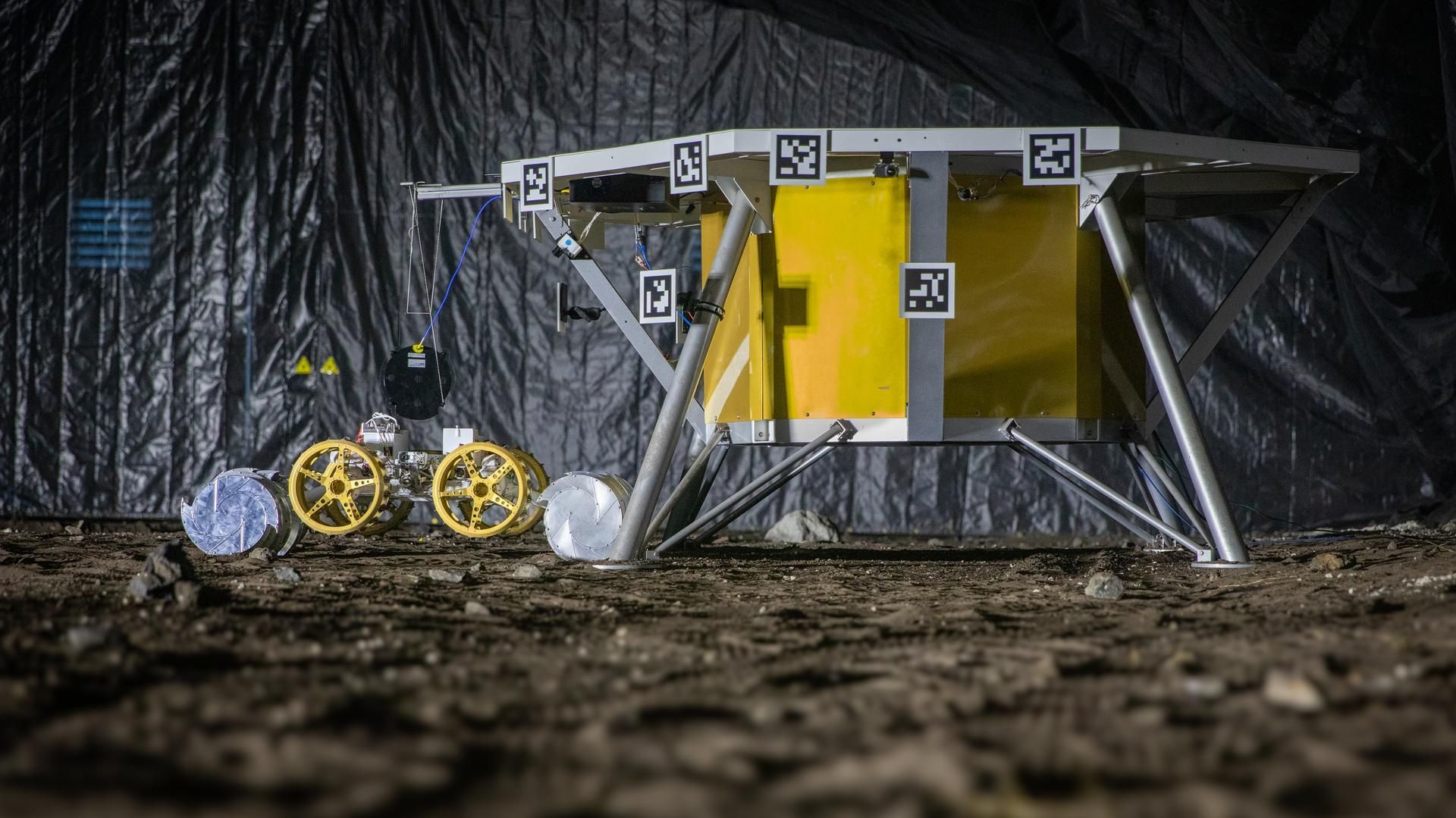
Providing our people shelter when they get there, built by machines that work without a crane hire, a concrete plant or a hardware store within four hundred thousand kilometres.
The problem
Construction with nothing delivered.
Every building on Earth assumes a supply chain. Take that away and construction becomes a completely different discipline.
There is no ready-mix truck. No steel yard. No second crane when the first one fails, and no engineer who can be on site by Thursday. Whatever machine is there has to grade the ground, move the mass, place the material and keep working through a fourteen-day night.
And it has to do it in gravity that makes every earthmoving instinct wrong.
What has to get built
In roughly this order.
Landing pads
Descent engines fire regolith outward at kilometres per second. Without a prepared pad, every landing sandblasts everything already on site. Pads come first.
Roads and grading
Level ground between the lander, the habitat and the dig site. Unglamorous, and everything else depends on it.
Shielding
Metres of regolith piled over a habitat is the cheapest radiation shielding available, because the material is free and already on site. It just has to be moved.
Foundations and berms
Anchoring, blast walls, containment. Bulk earthmoving, done by a machine that weighs a sixth of what it would here.
Why the wheel came first
Because none of it happens without traction.
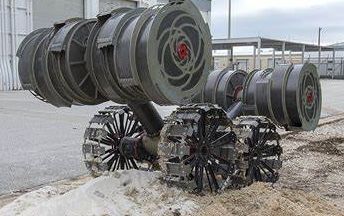
Every item on that list is a machine pushing against loose ground. Which means all of it fails at the same point: the contact patch.
Regolith is loose, angular and deep. A conventional tyre digs in and sits there. A rigid wheel skates. And with the machine weighing a sixth of its Earth weight there is very little pressing it down to help.
So we started at the bottom, literally — bladed drive wheels designed to bite into loose material and keep a machine moving while it works. Get that right and grading, hauling and placing all become possible. Get it wrong and the most sophisticated excavator ever designed spins in place.
Habitat and construction
First the pad. Then the road. Then the roof.
We are building toward the machines that do the first two.